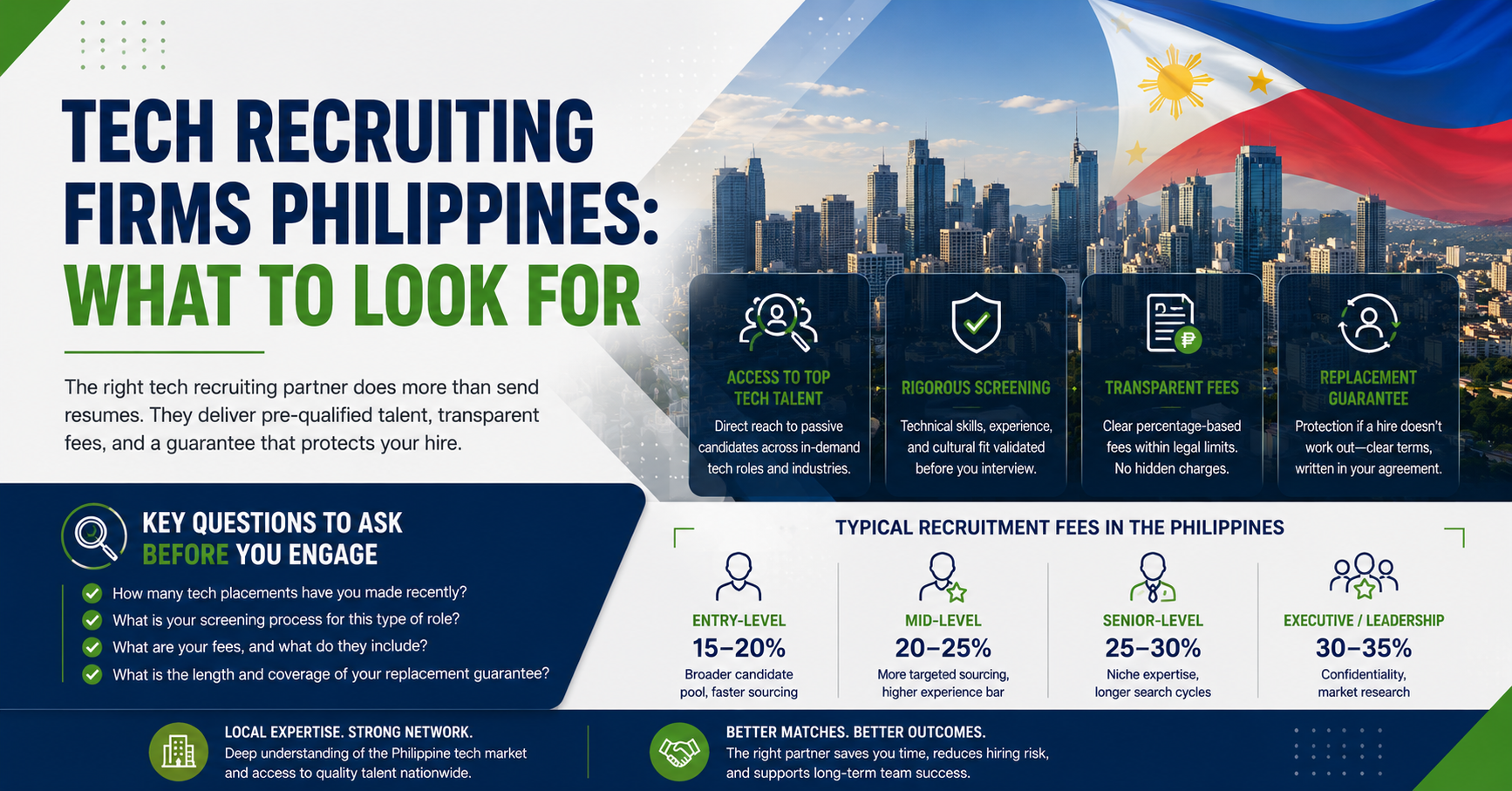

Finding the right tech job today often means partnering with an IT recruitment agency that understands both job seekers and employers. IT recruitment goes beyond sending resumes; it’s about strategy, timing, and aligning your skills with the right opportunity. For job seekers, working well with an experienced IT recruiter can be the difference between months of waiting and landing the right role quickly.
Understanding the IT Jobs Market in the Philippines
The IT-BPM industry remains a cornerstone of the country’s economy. IBPAP projects the sector will close 2026 at roughly $42.3 billion in export revenue and around 1.96 million employees, continuing steady growth even as AI adoption reshapes which roles are in highest demand. Global capability centers (GCCs), which are offshore units multinational companies run directly rather than through a BPO vendor, have become a major source of this growth, particularly for analytics, business intelligence, and transformation roles.
The most in-demand IT roles right now include software engineers and developers, cloud computing specialists, cybersecurity professionals, data analysts, IT project managers, and network or systems administrators. This mix reflects a broader shift: companies are hiring less for routine execution and more for roles that support digital transformation directly.
2026 IT Salary Benchmarks
Salary transparency has become the norm rather than the exception, with both job seekers and employers expecting structured, benchmarked offers. Based on 2026 market data for Metro Manila:
| Role | Junior (0–2 yrs) | Mid (3–5 yrs) | Senior (6+ yrs) |
| Software Developer / Engineer | ₱32,000 – ₱53,000 | ₱58,000 – ₱95,000 | ₱100,000 – ₱158,000 |
| DevOps / Cloud Engineer | ₱37,000 – ₱58,000 | ₱63,000 – ₱106,000 | ₱116,000 – ₱180,000 |
| Data Engineer / Analyst | ₱32,000 – ₱53,000 | ₱58,000 – ₱95,000 | ₱100,000 – ₱158,000 |
| QA Engineer | ₱26,000 – ₱42,000 | ₱48,000 – ₱74,000 | ₱79,000 – ₱116,000 |
| IT Project Manager | ₱42,000 – ₱69,000 | ₱74,000 – ₱116,000 | ₱127,000 – ₱190,000 |
Cebu roles typically run 15–25% below Manila equivalents. These figures are base salary only; HMO coverage, leave credits, and 13th month pay sit on top, so weigh the full package rather than base pay in isolation. Roles in cloud, cybersecurity, and specialized cloud platforms often clear the top of these ranges when the specific skill set is scarce.
What an IT Recruitment Agency Actually Does
Working with a specialized IT recruiter offers more than CV submission. Agencies typically have access to roles employers prefer to fill quietly rather than post publicly. They can help sharpen your resume and LinkedIn profile with the right technical keywords and structure, and most provide interview preparation, feedback, and negotiation support once an offer is on the table. Because they place candidates across many companies, they also carry a clearer picture of what’s actually competitive for your experience level than a single employer’s HR team would.
Step-by-Step: Working with an IT Recruiter
- Research and select the right agency. Choose one that specializes in tech roles rather than general staffing, and check past placements or testimonials before committing.
- Prepare your materials. Your resume should highlight specific frameworks and languages and quantify achievements (such as projects delivered, performance gains, and uptime improved). Your LinkedIn headline should state your core skill directly (e.g., “Backend Developer | Java & Node.js”). Certifications, open-source contributions, or hackathon experience are genuine differentiators.
- Build the relationship. Be upfront about remote versus onsite preference, salary expectations, and your technical stack. Respond quickly when a recruiter follows up, as it speeds up matching and signals genuine interest.
- Use the feedback loop. Take the recruiter’s guidance on likely technical questions seriously, and always ask for feedback after interviews, whether or not you got the role.
- Negotiate with full information. Weigh benefits alongside base salary; a recruiter can often tell you where an employer has room to move.
- Keep upskilling and stay in touch. Cloud platforms, cybersecurity, and data analytics remain the fastest-growing skill areas. Maintaining the relationship with your recruiter after placement means they can reach you again for future roles.
How to Prepare for Technical Interviews in the Philippines
Technical interviews at Philippine IT employers (particularly GCCs and larger BPOs) commonly start with an online assessment on a platform like HackerRank or Codility before any live interview happens, so treat that stage as seriously as the interview itself. For mid-to-senior roles, expect a live coding or system design round where interviewers are evaluating your reasoning process as much as the final answer; narrating your thinking out loud matters more here than getting a flawless solution on the first attempt.
Clear English communication is weighted heavily, especially at multinational GCCs where you may be working with global teams. Practice explaining technical concepts simply, not just correctly. It also helps to research the specific tech stack of the company beforehand, since interviewers often probe how you’d approach a real problem in their environment rather than a generic one. Behavioral questions on ambiguity and cross-functional collaboration are typically weighted alongside technical skill, not treated as an afterthought.
Common Pitfalls and How to Avoid Them
| Pitfall | How to Avoid It |
| Applying to every role without focus | Be selective; target roles that match your experience and growth path. |
| Generic, untailored resumes | Adjust your resume per role, including relevant technical keywords. |
| Slow or unclear communication | Respond promptly; flag scheduling conflicts early. |
| Unrealistic salary expectations | Anchor on market data rather than assumption. |
| Dismissing recruiter feedback | Recruiters see many hiring cycles, so their feedback is usually well-founded. |
Frequently Asked Questions
Do candidates pay a fee to work with an IT recruitment agency in the Philippines? No. Recruitment fees are paid by the hiring employer, not the candidate. Be cautious of any agency that asks you for payment during the process.
How long does IT recruitment typically take? Most placements take four to eight weeks from initial screening to offer, though specialized or senior roles can take longer depending on how narrow the required skill set is.
What is the average software developer salary in the Philippines in 2026? Junior developers in Metro Manila typically earn ₱32,000 to ₱53,000 monthly, mid-level is about ₱58,000 to ₱95,000, and senior developers typically earn ₱100,000 to ₱158,000, with cloud and cybersecurity specialists often above this range.
What should I expect in a technical interview with a Philippine IT employer? Most processes start with an online coding assessment, followed by a live technical round and a behavioral interview. Clear communication and structured reasoning matter as much as getting the correct answer.
What is A7 Recruitment’s placement process for IT candidates? A7 runs a four-stage process: an intake conversation, skills-based screening against active roles, interview coordination with feedback loops, and offer support through negotiation and onboarding.
A7’s IT Placement Process
You don’t have to navigate the market blind. A7 Recruitment handles the vetting, employer coordination, and negotiation on your behalf, so you spend your time preparing instead of refreshing job boards. Explore open tech roles at https://a7recruitment.com/careers/, or contact our team directly at https://a7recruitment.com/contact-us/ to get matched against IT roles that fit your background right now.