Statutory rates cited below reflect the schedules published by SSS, PhilHealth, and Pag-IBIG (HDMF) as of this article’s publication date. These rates are reviewed periodically by each agency, so confirm the current schedule directly with SSS, PhilHealth, or Pag-IBIG before using these figures for payroll or budgeting.
Base salary is only part of what it costs to hire someone in the Philippines. Employers who budget purely on the number in the offer letter are consistently surprised by the real monthly cost once statutory contributions, 13th month pay, and other mandatory obligations are added. Understanding the full picture upfront, before you’re mid-search, makes it easier to set a realistic budget and avoid a compensation package that looks affordable on paper but isn’t once the full employer cost is calculated.
The core components of employment cost
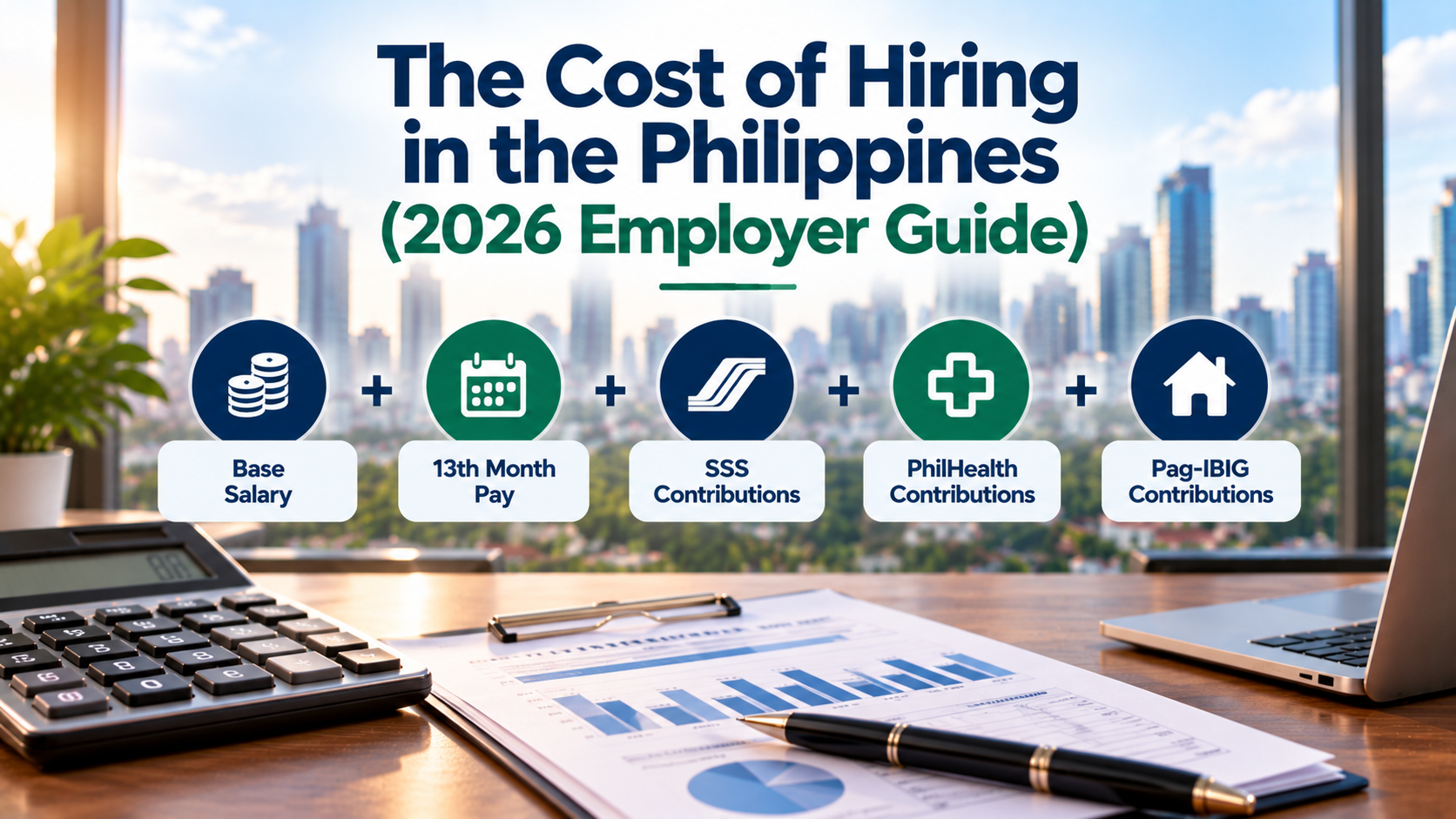
Base salary. This is the starting point, but it should be benchmarked against your specific role, industry, and region, not treated as a flat figure across the whole team. Minimum wage also varies by region and is set by the Regional Tripartite Wages and Productivity Boards, so employers hiring outside Metro Manila should confirm the applicable regional rate.
13th month pay. Mandated under Presidential Decree 851, 13th month pay is equivalent to at least one twelfth of an employee’s total basic salary earned within the calendar year, and it must be paid on or before December 24 each year. It is not optional, and it is not the same as a discretionary bonus. Employers typically accrue this monthly so the year-end payout doesn’t hit as a single large expense.
SSS contributions. Under the current schedule, the total SSS contribution is 15 percent of an employee’s Monthly Salary Credit (MSC), split 10 percent employer and 5 percent employee. The MSC runs from a floor of 5,000 pesos to a ceiling of 35,000 pesos, so contributions stop increasing once monthly pay passes that ceiling. Employers also shoulder a small additional Employees’ Compensation contribution on top of the SSS share.
PhilHealth contributions. The current PhilHealth premium rate is 5 percent of monthly basic salary, split equally between employer and employee, with a salary floor of 10,000 pesos and a ceiling of 100,000 pesos.
Pag-IBIG (HDMF) contributions. Pag-IBIG contributions are calculated on a Monthly Fund Salary capped at 10,000 pesos, at 2 percent each for employer and employee, meaning the maximum mandatory contribution is 200 pesos from each side, or 400 pesos total, regardless of how much the employee actually earns above that cap.
A sample cost breakdown
The table below shows the added employer cost, on top of base salary, for an employee earning 40,000 pesos a month in basic salary. Figures are based on the statutory rates described above.
| Cost Component | Basis | Monthly Amount (PHP) |
| Base salary | Stated monthly salary | 40,000 |
| SSS (employer share + EC) | 10% of MSC, capped at 35,000, plus EC | 3,530 |
| PhilHealth (employer share) | 2.5% of monthly basic salary | 1,000 |
| Pag-IBIG (employer share) | 2% of fund salary, capped at 10,000 | 200 |
| 13th month pay (monthly accrual) | 1/12 of annual basic salary | 3,333 |
| Total employer cost | 48,063 |
At this salary level, mandatory statutory and 13th month obligations add roughly 20 percent on top of base pay, before accounting for optional benefits such as HMO coverage, allowances, or performance incentives, all of which are common in competitive offers but not legally required.
Other costs employers should budget for
HMO and health coverage. Not legally mandatory in most cases, but close to a market standard expectation in IT, BFSI, and BPO hiring, and frequently a deciding factor for candidates comparing offers.
Allowances. Transportation, communication, or meal allowances vary by employer and industry but are common enough that candidates often expect them to be part of a competitive package.
Overtime and holiday pay. Governed by the Labor Code and DOLE issuances, with specific premium rates for work performed on rest days, regular holidays, and special non-working days. These obligations apply regardless of company size.
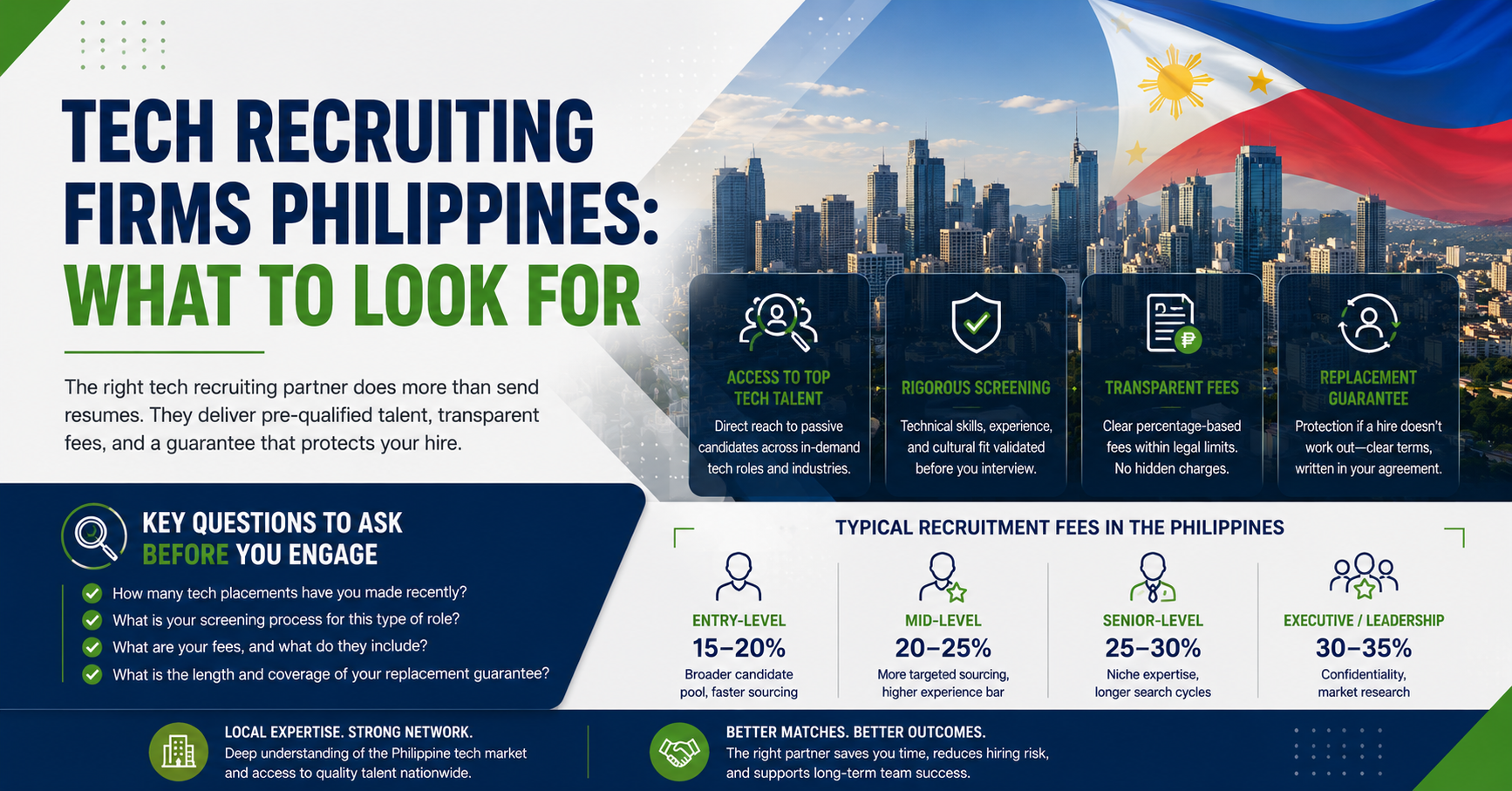
Recruitment costs. If you’re filling the role through a recruitment agency rather than an in-house team, that’s a separate line item on top of the employee’s compensation package. For executive and C-suite searches specifically, professional recruitment fees in the Philippine market typically fall in the 30 to 35 percent range of the candidate’s first year total compensation. For other role levels, agency fees vary by search type and seniority. A7’s guide to recruitment agency fees in the Philippines covers the full breakdown by role level and engagement model.
Why this matters before you contact an agency
Employers who understand the full cost of a hire, not just the advertised salary, are in a much stronger position when budgeting for a new role or comparing the true cost of an internal hire against outsourcing, staff augmentation, or agency-supported recruitment. It also prevents a common and costly mistake: setting a salary offer that looks competitive in isolation but doesn’t leave enough budget room for the mandatory contributions and benefits that come with it.
A7 Recruitment’s approach
A7 Recruitment works with employers across the Philippines to plan hiring budgets realistically, factoring in the full cost of employment, not just the headline salary, so there are no surprises once an offer is accepted.
To discuss your hiring requirements with A7 Recruitment, contact our team at https://a7recruitment.com/contact-us/ or explore our services at https://a7recruitment.com/services/.