
Choosing an executive search model is one of the first decisions a company makes when it needs to fill a senior or C-suite role, and it’s a decision most hiring teams make without fully understanding what separates the two options. Retained and contingency search look similar from the outside: both involve a recruiter identifying and presenting candidates for a leadership position. The difference lies in how the engagement is structured, how much access the recruiter has to the search, and what that means for the outcome.
What retained executive search means
In a retained search, the employer engages one search firm exclusively for the role and pays for the engagement in stages, typically with a portion due at kickoff, a portion at a defined milestone such as candidate presentation, and the remainder on placement. Because the firm is engaged exclusively, it commits dedicated time to building a confidential shortlist, often reaching out directly to passive executives who are not actively job hunting and would not otherwise apply to an open posting.
This model tends to suit roles where confidentiality matters, where the pool of qualified candidates is genuinely small, or where the cost of a bad hire at the top of the organization outweighs the cost of a more thorough, dedicated search process.
What contingency executive search means
In a contingency search, the employer typically works with one or more agencies at the same time, and payment is due only if and when a candidate from that agency is hired. There is no upfront commitment, which makes contingency search lower risk in terms of cost, but it also means no single firm is guaranteed the assignment, so the depth of sourcing and the priority given to the search can vary.
Contingency search tends to work well for senior roles where the candidate pool is larger, where speed matters more than exhaustive market mapping, or where the organization is comfortable running a more open process.
Comparing the two models
| Factor | Retained Search | Contingency Search |
| Engagement | Exclusive to one firm | Often multiple firms at once |
| Payment structure | Staged fee, paid regardless of outcome at each milestone | Paid only on successful placement |
| Confidentiality | High. Suited to sensitive or unannounced leadership changes | Lower. Multiple firms and broader outreach reduce discretion |
| Sourcing approach | Proactive, direct outreach to passive candidates, including those not actively searching | Primarily sourced from active candidates and existing networks |
| Priority given to the search | Dedicated, since the firm has exclusivity | Shared across the firm’s other contingency assignments |
| Best suited for | C-suite, confidential replacements, roles with a narrow talent pool | Senior roles with a wider candidate pool or tighter timelines |
How fees typically work
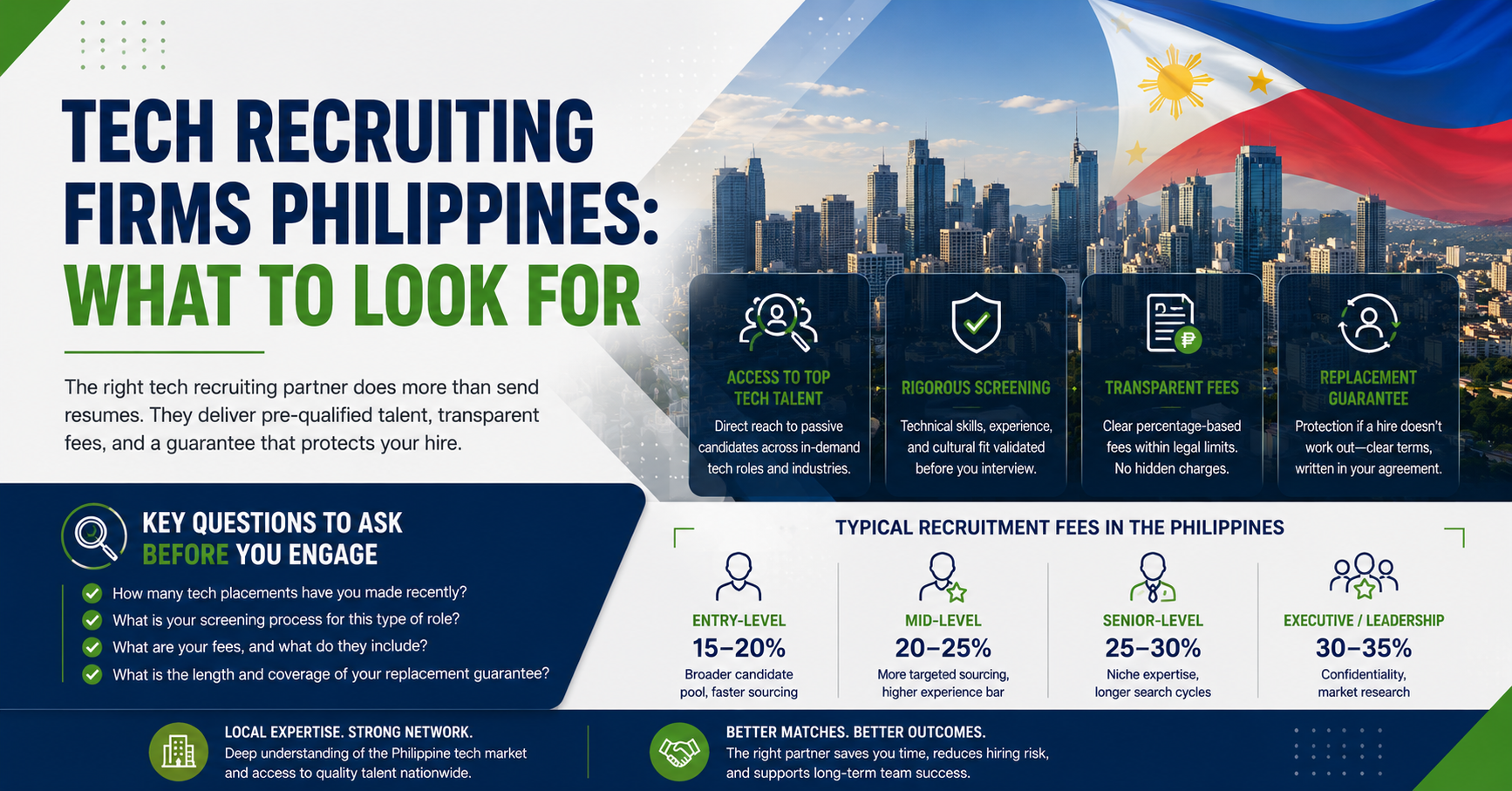
Executive search fees in the Philippine market are generally structured as a percentage of the placed candidate’s first year total compensation. For senior and C-suite roles specifically, a fee in the 30 to 35 percent range is typical of what the market charges, regardless of which model is used. Retained engagements usually break this fee into stages tied to the search process, while contingency engagements collect the full fee only once a hire is confirmed.
Which model actually fits your hire
The right model depends less on preference and more on the specific conditions of the search. A retained approach generally makes sense when the role is confidential, when the organization needs to reach passive executives who are not visible through normal channels, or when the position is critical enough that a dedicated, exclusive search process reduces the risk of a costly mis-hire. A contingency approach tends to fit better when timelines are tighter, when the talent pool for the role is broader, or when the organization wants to compare candidates surfaced through multiple channels at once.
Some organizations also use a hybrid approach for different searches within the same year, applying retained search to genuinely critical leadership roles and contingency search to senior roles that are important but less sensitive or less narrowly specialized.
A7 Recruitment’s approach to executive search
A7 Recruitment supports organizations in sourcing senior leaders who fit the business, not just the job description, and handles executive searches with the confidentiality that leadership-level hiring requires.
To discuss an executive or C-suite hiring need with A7 Recruitment, contact our team at https://a7recruitment.com/contact-us/ or explore our services at https://a7recruitment.com/services/.