
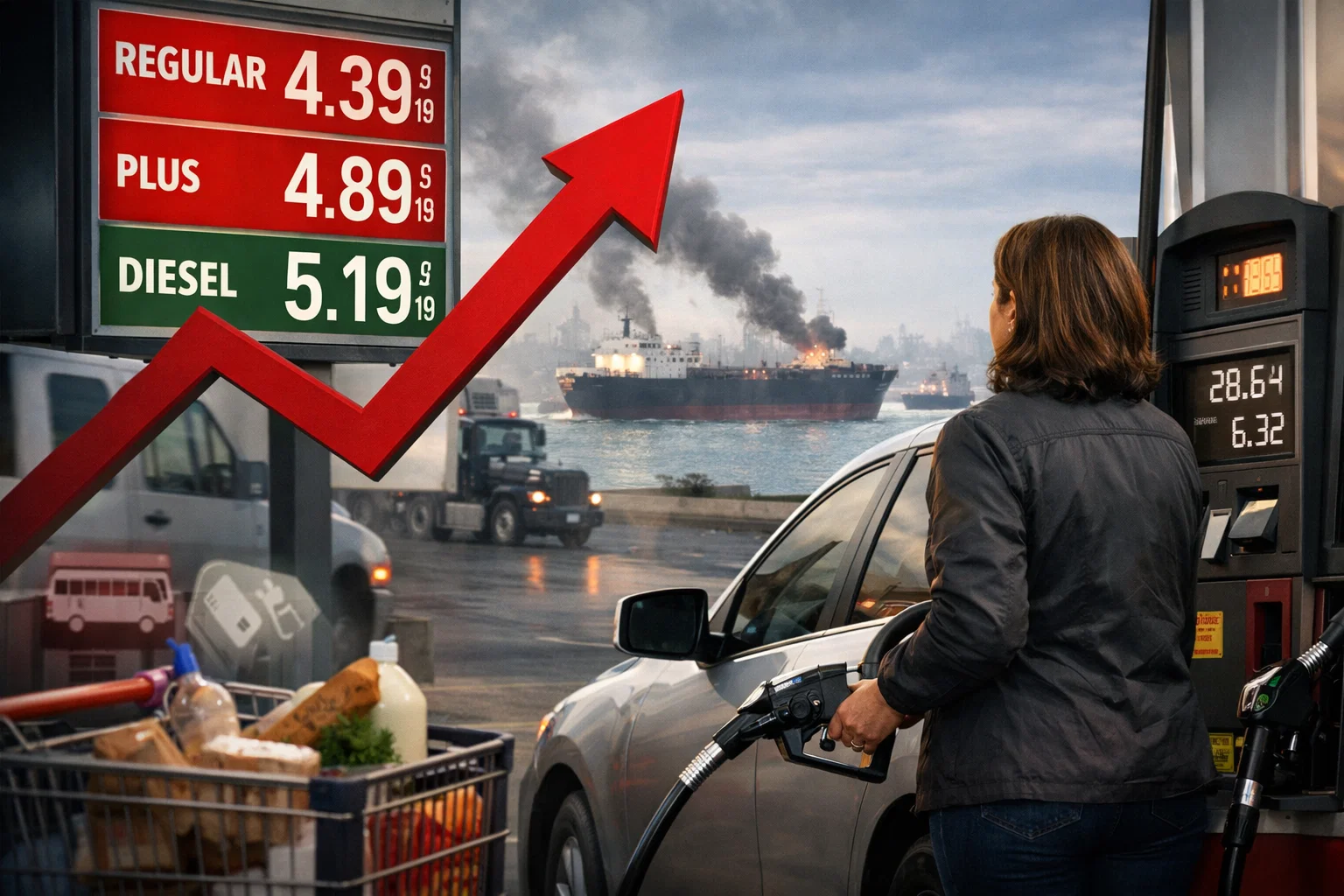
One of the clearest signs of an energy crisis is rising fuel prices. As the conflict involving Iran, the United States, and Israel intensifies, consumers are already seeing the effects. Reuters reported that average U.S. gasoline prices have surpassed $4 per gallon, driven by supply disruptions and uncertainty tied to the war and the Strait of Hormuz. Oil prices have also climbed sharply as markets react to attacks on tankers and threats to regional energy infrastructure.
These higher fuel prices do not stay limited to gas stations. They eventually affect delivery costs, airline fares, food prices, and many other daily expenses. When oil becomes more expensive, businesses often pass those costs on to customers. This is why energy conflicts can quickly become cost-of-living issues, even for people living far from the actual war zone.
The situation also puts pressure on policymakers, because rising energy prices can make inflation harder to control. What begins as a geopolitical conflict can turn into an economic burden for ordinary households, showing how tightly connected global energy markets really are.